


From Chatbots to Agents: What OpenAI’s Codex Numbers Mean for Your Team
OpenAI just published a research paper measuring how its own staff use AI, and the numbers are striking. Inside the company, the chatbot is no longer the default. The agent is. If you run IT anywhere, that quiet shift is the part worth your attention.
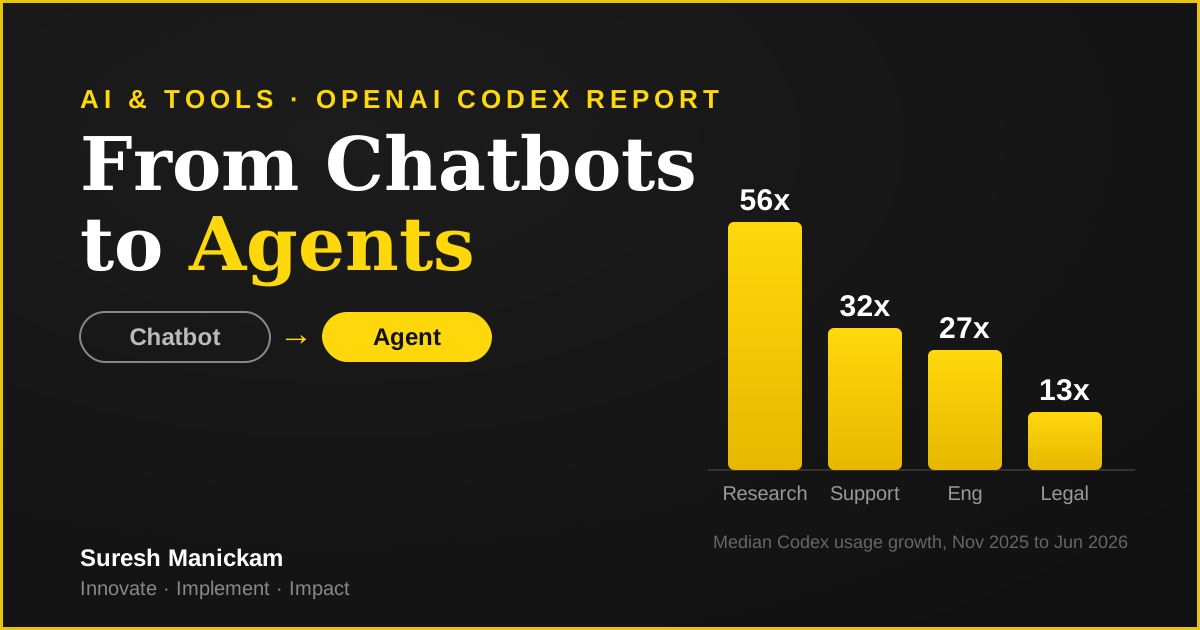
The paper, titled "The shift to agentic AI", tracks a year of internal usage of Codex, OpenAI's coding agent. The headline figures read like a hockey stick. By June 2026, median Codex use in their Research team was 56 times higher than in November 2025. Customer Support rose 32 times, Engineering 27 times, and even Legal grew 13 times over.
The chatbot quietly stopped being the main tool
Through August 2025, the average OpenAI worker spent less than 10% of their tokens on Codex. ChatGPT was still the default. Less than a year later, Codex accounts for more than 85% of output tokens for the average worker, and a remarkable 99.8% of all weekly output tokens generated across the company.
That is the real signal. Not "the AI company uses a lot of AI", but that the unit of work changed. A chatbot answers a question. An agent takes a task, runs for minutes or hours, calls tools, and comes back with something finished. People moved from asking to delegating.
The fastest adopters are not the engineers
Here is the part that should make every IT leader sit up. Non-developer adoption outpaced developer adoption everywhere. Since August 2025, weekly non-developer users rose 137 times among individuals and 189 times among organisations. Inside OpenAI, lawyers, finance staff and recruiters crossed over to Codex as their primary tool around April 2026, and their switch was faster than the engineers' had been.
More than a quarter of the work done with Codex by people in business functions turned out to be engineering or coding. Agents lowered the cost of crossing a skill boundary, so a finance analyst could automate a data pull or a recruiter could build a small tool, without filing a ticket and waiting a week.
What this means for you
A few practical takeaways if you are planning IT strategy for the next year.
- Budget for agents, not just chat seats. Agentic tasks burn far more tokens than chat. Heavy users at OpenAI were generating over 60 hours of agent runtime a day across parallel agents. Per-seat chat pricing does not model that.
- Your non-technical teams will lead demand. The pull is coming from finance, legal, ops and marketing, not only from developers. Plan enablement and guardrails for them now.
- Governance has to move with it. When a recruiter can spin up a script that touches real data, your access controls, logging and review processes need to assume that, not just protect the dev team.
One honest caveat: this is OpenAI measuring OpenAI, the most AI-forward workforce on the planet, using its own product. Treat the absolute numbers as a best case, not a forecast for your office. But the direction holds. The shift from chatbot to agent is real, it is already underway, and the people who benefit most may be the ones you least expect.
If your AI plan still assumes a chat window and a developer audience, this paper is a useful nudge to rethink both.