

cursor
S U R E S H   M A N I C K A M
[ Innovate ] [ Next: Implemented ]

Innovation, proven.

A leader who reinvents the core,
not just keeps the lights on.

I am an internal systems and ICT leader with 20+ years owning enterprise platforms end to end. I do not just run systems. I rethink them: the core ERP, the data, the cloud and the way teams deliver, so the business moves faster and spends less. That instinct is not new. I shipped gamified learning long before it was a buzzword and built visual product search before it went mainstream. The tools change, the habit of finding a better way does not.

  • Systems Strategy
  • Cloud Architecture
  • Data & AI Governance
  • Delivery Models
  • Cost Transformation
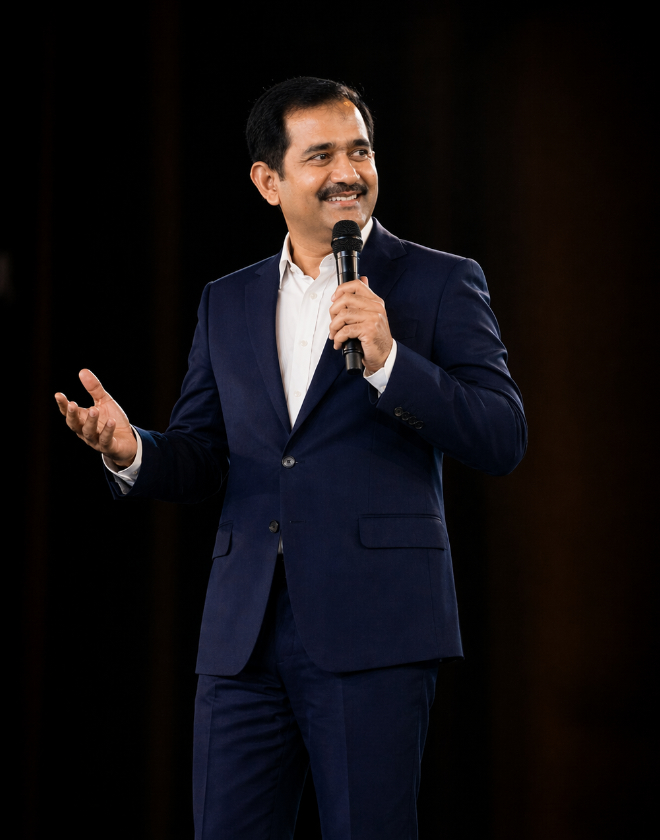
Suresh Manickam speaking on stage
How I turn ideas
into working systems
04

A repeatable way of working that has reset platforms across four countries.

[01]

Question the
status quo

I start by challenging what everyone has accepted. Most legacy pain is a design choice from years ago, not a real constraint.

[02]

Re-architect,
not patch

When the core is the problem, I rebuild it: a single global ERP, cloud-first infrastructure, and integrated data instead of another workaround.

[03]

Prove it
with data

Every change is measured on cost, adoption, accuracy and decision speed. The numbers decide whether it worked, not opinions.

[04]

Embed and
scale adoption

An innovation only counts once people use it. I drive training, governance and change management until the new way sticks.

// Proof, by the numbers
Platform cost reduction

0%

Delivered through multi-year roadmaps that funded their own rollout while improving operational resilience.

ERP user adoption

0%

Reached within three months of launching a single Odoo ERP across New Zealand, Singapore, Malaysia and China.

Data accuracy gain

0%

After connecting eight enterprise systems into one real-time source of truth for 120+ business users.

Faster decisions

0%

Cloud-first analytics and executive reporting cut the time leaders needed to make decisions in half.

// Where I am taking it

Innovation is a direction,
not a project.

01

AI as a teammate,
governed from day one

I treat AI as a capable colleague, not a science project. The upside is huge, but it only works inside clear acceptable-use guardrails and solid data governance. I want teams using AI to strip out the busywork, with the rules written before the first prompt, not after the first incident.

02

Cloud-first as the
default, not the exception

Every new system should start with one question: why not cloud? Elastic infrastructure, lower fixed cost and faster recovery are not a future state to me. They are the baseline I design from.

03

One source of truth
you can actually trust

Innovation dies in spreadsheets and disconnected systems. My north star is a single integrated data layer that every team and every model can rely on, so decisions are made on facts, not on whoever is loudest in the room.

04

Delivery that
compounds

I care less about one big launch and more about a way of working that improves every quarter: lightweight governance, small empowered squads, and predictable delivery that frees people to think.

05

Technology that funds
its own future

The best innovations pay for the next one. I design roadmaps where each step lowers enough cost or risk to fund the next bet, so transformation never stalls waiting for budget.

// In my words

How I think about
the work

I own the systems roadmap and the budget, and I still architect the migrations and integrations myself. The best technology leaders, in my view, never fully hand off the craft.

I have run internal systems strategy across four countries and many projects at once, so I build for the next order of magnitude, not just today's headcount.

Cost is not something to apologise for at budget time. I architect platforms so they get cheaper to run, and I hold vendors to the value they promised.

Whether it is GDPR, data governance or AI acceptable use, I write the guardrails early, so the team can move fast without creating risk.

Cost, adoption, accuracy, decision speed. If a change cannot be felt in the numbers, I do not call it done.

A system that ships but nobody uses is a failure. I invest in training, change and support until the new way simply becomes the way.

My mix of MBA, PMP, Scrum, Lean Six Sigma and AWS is deliberate. I want to stay fluent in both delivery rigour and cloud architecture, and I keep adding to it.